
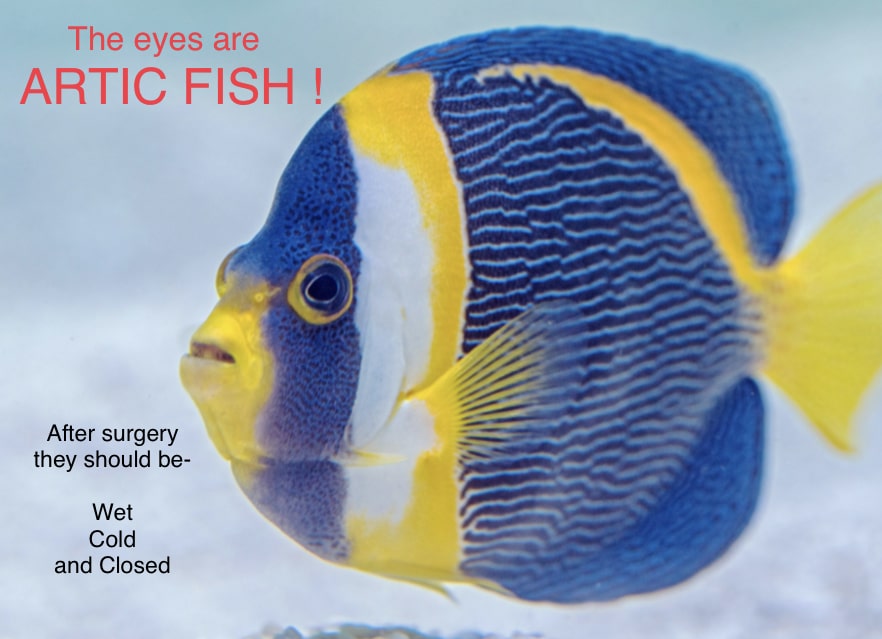
The Eyes Are Arctic Fish!
Recovery from Eyelid Tucks or Blepharoplasty
Think of your eyes as being like ARCTIC FISH when recovering from eyelid tucks or blepharoplasty. This is a great analogy to help with recovery. We must keep them wet and moist to minimize drying to recover best from cosmetic eyelid surgery. Keeping the eyes very moist is actually good for them at all times, but after surgery it’s of paramount importance to keep them wet or “in water.” This educational writing will review this component of recovery after cosmetic eyelid surgery. It was written at the request of a patient from Wilmington, DE.
To get a better understanding about my arctic fish analogy, it’s important to understand one particular anatomic point about the eye. The cornea has no blood supply. This is the outer layer of the eye. The cornea is the only part of the body with no blood supply. It gets its nourishment and oxygen from tears. When we blink, we spread our tears over the cornea, giving it the nourishment to live. If we didn’t blink, the cornea would dry out and scar. Hence, it’s critical to blink. But after surgery, the eyes need more help than just occasional blinks will provide. The eyes need to be CLOSED a huge amount of time, so they heal faster and with the lowest risks.
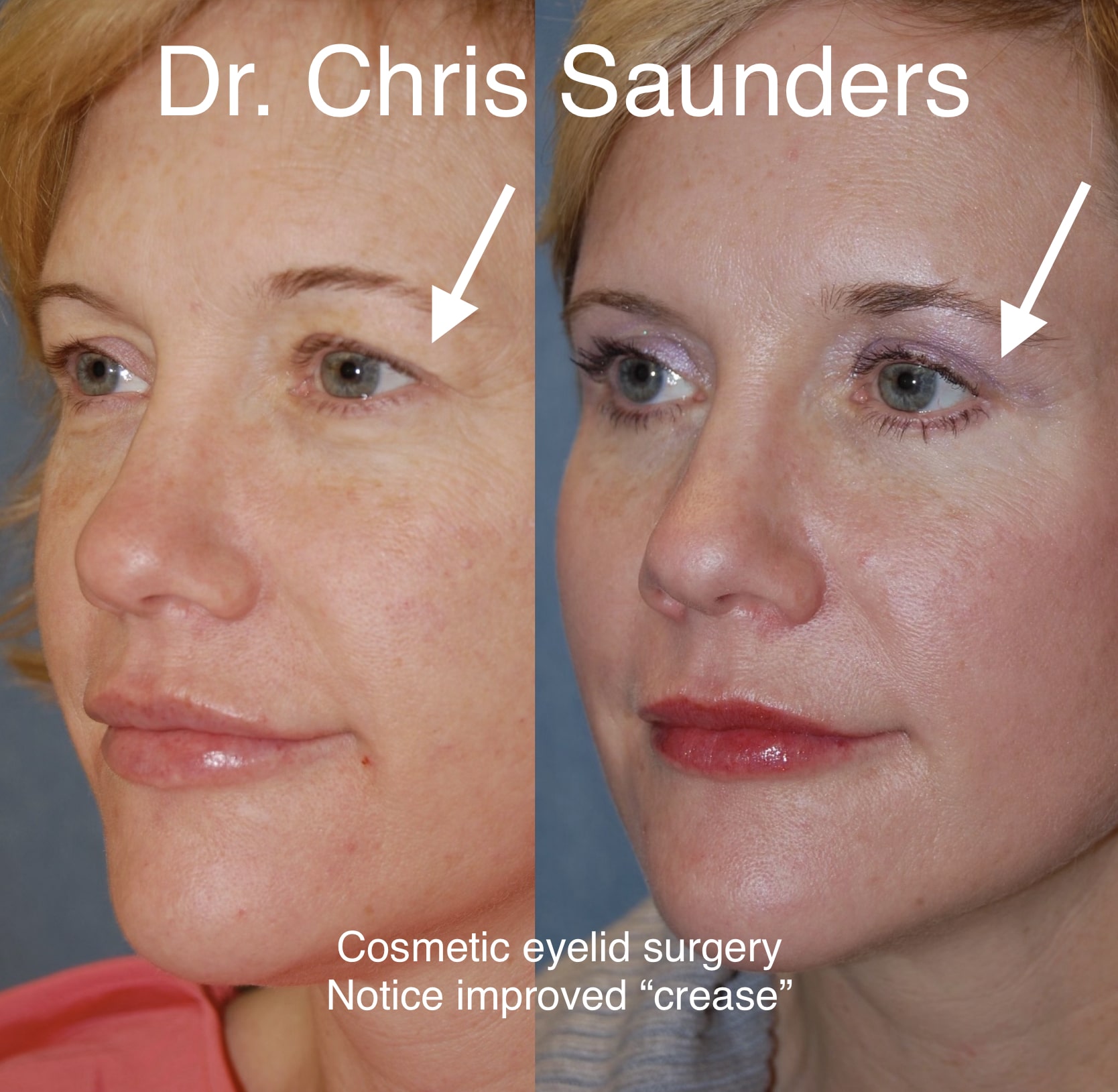
Eyelid lifts or tucks are medically called a blepharoplasty. The purpose of the operations are to make the eyes look young, healthier, and less tired. It is an operation I specialize in and perform extremely frequently. Upper eyelids are done for hooding and loose or extra skin. Lower eyes are done for bags and circles. Both operations are done for tired and old looking eyes. I have reviewed the recovery of this operation in other locations on my web page. This entails head elevation, closing of the eyes, and icing of the eyes. But this writing will emphasize on how critical “eyelid closure” is to maximize recovery and get the best results. Patients interested in the standard but important recovery instructions for this cosmetic operation can link there now.
Why an Arctic Fish?
Fish need water, just like the eyes need water. And after surgery, swelling is diminished by icing or cold temperatures. So, ARCTIC FISH live in ice cold water, and your eyes need this after surgery. You cannot keep them closed too much. You cannot ice them too much. If you want to heal the quickest, keep those eyes closed at all times, and ice them constantly.
The best way to describe this type of recovery instruction is “boring!” We are so used to using our eyes all day long. Keeping them closed for the majority of the day will really impact your life. There honestly is very little pain, so that’s good news. But keeping the eyes closed can be very frustrating and difficult. I’ve personally had this operation done to me. I didn’t even take a Tylenol. I am not joking. I had no pain at all. But keeping my eyes closed and iced was not easy. It really is best described as very boring and inconvenient. It’s not painful and not easy, but it can’t be overemphasized how important it is.

Dry Eyes:
Dry eyes are very common as we get older. This condition occurs in many patients regardless of having surgery or not. The symptoms of dry eyes include tearing, irritation, redness, and itching. Patients will say, “My eyes aren’t dry, because they are watering a lot.” This is the classic dry eye symptom. They water because they ARE DRY!” But if you have dry eyes before surgery, we have to be extra careful afterwards. The patient with dry eye symptoms before surgery, can have a worsening of symptoms afterwards. They have to be extra careful and follow instructions closely.
If dry eyes are severe before surgery, then it is recommended that you “stage” upper and lower eyes. Some patients will just want the uppers done for hooding. Some will just want lowers done for bags and circles. Many patients want both done at the same time. This is sometimes called a four lid blepharoplasty. If you have severe dry eyes, then it’s recommended that just the uppers or lowers be done at one time. The second operation can be done later or “staged” after the first one heals. This is easier on the eyes. It minimizes dry eye problems. It’s important for those with severe dry eyes before surgery.
What Can Go Wrong?
If you don’t keep your eyes closed enough, it can really delay recovery. I’ll tell my patients that we should plan on one week of really closing and icing the eyes. After this, it’s usually a quick return to normal activities. If you don’t close and ice as frequently as you should, you can get injected, swollen, and red eyes. This swelling will delay recovery, and it can double the recovery period. When eyes get this type of swelling, the main treatment is more eye closure. So it’s ironic, but if you don’t close them enough, you can find that because of swelling, you now have to close them even longer.
Chemosis is conjunctival edema. The conjunctiva is the outer layer of the white part of the eye. It’s where you get pink eye or conjunctivitis. After eyelid surgery, you can get chemosis. It’s actually not uncommon to a minor degree. But too much opening of the eyes can lead to more chemosis, and this can delay recovery. It’s not a good sign. It’s a sign that the patient needs to really follow the instructions better. Chemosis will resolve with proper treatment, so it’s best to take it as a warning and close those eyes all the time.
Frustration can be a part of this recovery. The vast majority of patients heal uneventfully and on a normal recovery path. But this period of closing of the eyes can be extremely frustrating. We are so used to looking at our phones, computers, and screens for long periods of time. These are the activities that really dry out the eyes. That’s the difficult part of the recovery. We have to limit what we do so regularly. But remember, there is basically no pain. That’s the easy part. It’s just the boring nature of keeping the eyes closed. Patients should occupy their time with music, podcasts, audiobooks, and other listening activities. By doing this, you will have an easier time getting back to normal.
Treatment:
If problems develop after surgery, the first treatment is to really go back to the basics. This means head elevation, icing, and you guessed it – close those eyes. But other things can be started to help us heal. Eye drops are very helpful. I recommend artificial tears that are preservative free. Preservative free eye drops will say this on the bottle or have PF written on it. Artificial tears are not drops for redness or itching relief. The bottles will say “artificial tears” on them. Just make sure they are preservative free. They can be used regularly and frequently and will help us heal after eye tucks.
Steroid eye drops will occasionally be prescribed to help with prolonged redness or chemosis. They should be used as prescribed, so follow the instructions closely. Shake the bottle well before using them. I have found these drops to really help when needed. Frequent follow-ups with me and regular visits to the office are important too. There is no charge for this. It just helps me keep a close “eye” on you.
Summary:
When recovering from a blepharoplasty, it’s important to think of your eyes as ARCTIC FISH. They heal best in a wet and cold environment. The cornea receives its blood from tears, and it’s the only part of the body with no blood supply. Eyelid closure gives the eyes the nutrients and oxygen necessary to heal. It cannot be overemphasized as to the importance of keeping the eyes closed. It can be very boring! But following the instructions closely and icing the eyes will help minimize dry eyes and speed up recovery. By doing this, we will get the best results!
